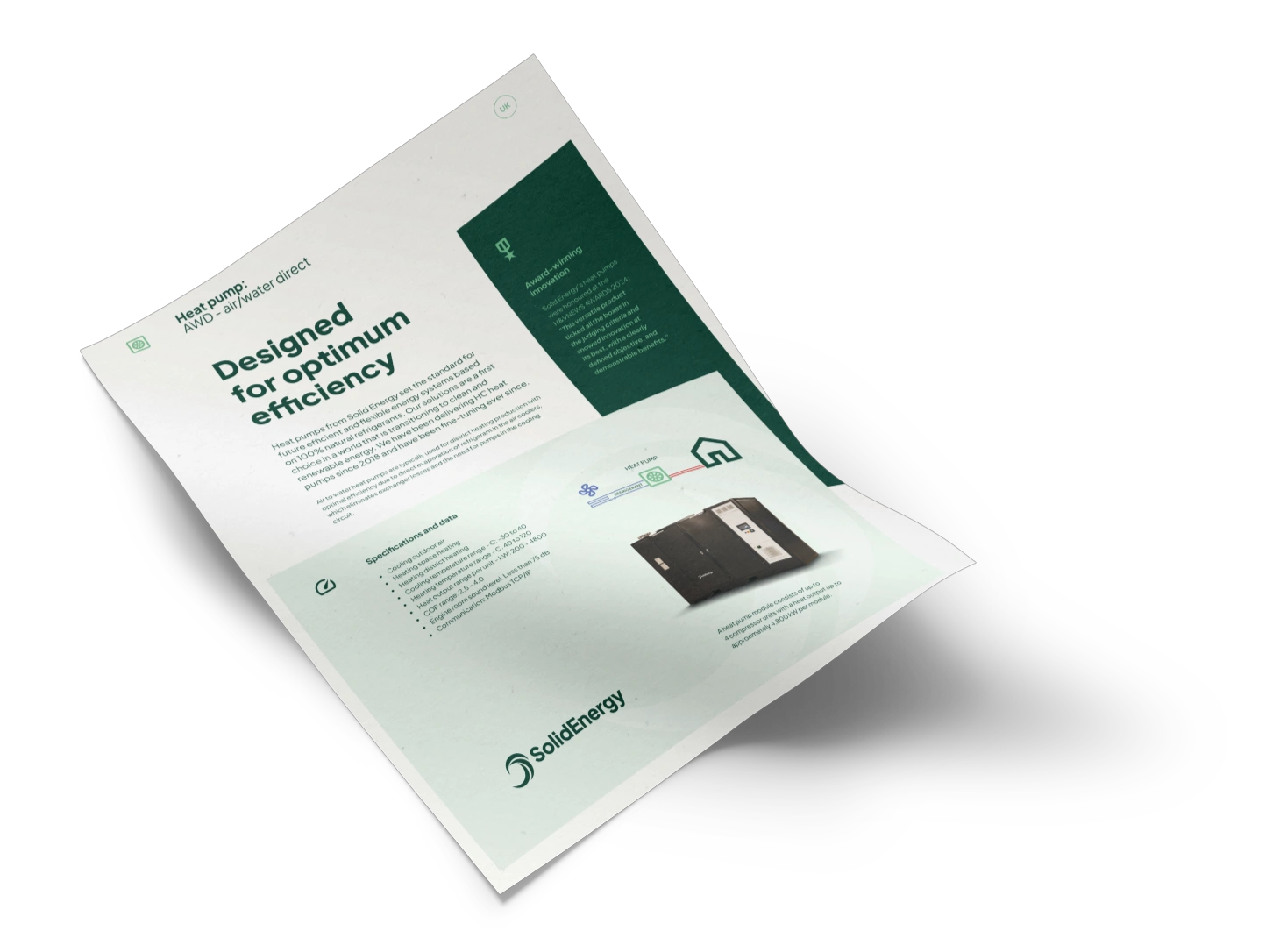
Industrial Air Source Heat Pump
An industrial air source heat pump delivers stable, efficient heat to district heating systems, industrial facilities and commercial operations.
It performs reliably even in cold climates, without combustion and without fossil fuels.

! 0
+
Number of units of HC heat pumps we have sold since 2018
! 0
˚C
The flow temperature that our heat pumps can handle.
! 0
MW+
The total amount of MW we have delivered — divided into 150+ units
How does an industrial air source heat pump work?
A heat pump transfers existing thermal energy from the outdoor air rather than generating it through combustion. Even at low outdoor temperatures, there is sufficient thermal energy available for the system to operate efficiently.
The refrigerant absorbs heat from the air, is compressed to raise the temperature, and the heat is transferred to your heating system. This makes it significantly more energy-efficient than conventional boilers and an obvious first choice for organisations focused on operating economy and lower CO2 emissions.
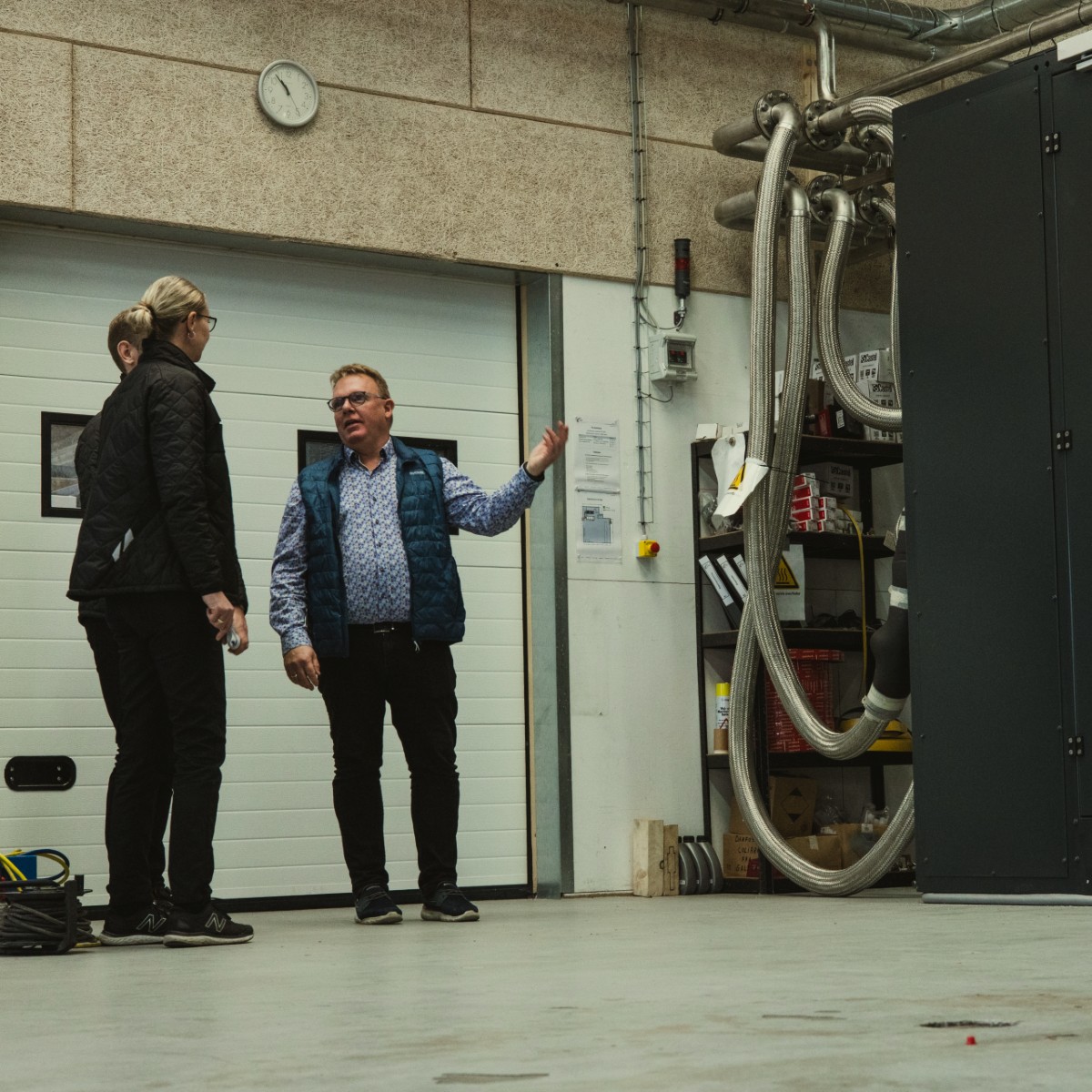
Advantages of industrial air source heat pumps
There are several reasons why industrial air source heat pumps are gaining ground in both industry and district heating.
Reliable performance in Northern European climates
Solid Energy's systems use 100% natural refrigerants (HydroCarbon), which contribute to extreme efficiency across a wide temperature range.
This makes them well-suited to most Northern European climates in terms of both sustainability and operating economy.
Lower maintenance requirements
Compared to combustion-based systems, maintenance requirements are considerably lower.
There is no fuel storage, no flue gas treatment and fewer mechanical components subject to wear. This translates directly into less downtime and lower service costs over the system's operational life.
A stronger environmental profile
Powered by renewable electricity, an industrial heat pump can significantly reduce your organisation's CO2 footprint.
This aligns well with increasingly stringent requirements on industrial emissions, without higher operating costs.
Points of strength

Reliable design

Flow up to 165°C

Intelligent monitoring

Natural refrigerants

Plug & play

Possibility of FAT testing at the factory

Quiet operation

Competitive Capex and Opex
Modular solutions from 200 kW to 4,800 kW
Solid Energy's heat pumps are modular with capacities ranging from 200 kW to 4,800 kW and can deliver flow temperatures up to 150°C, or up to 165°C with the high-temperature variant.
The modular design means each system is configured to match the specific requirements of your installation, whether it serves a single industrial facility or a large-scale district heating network.
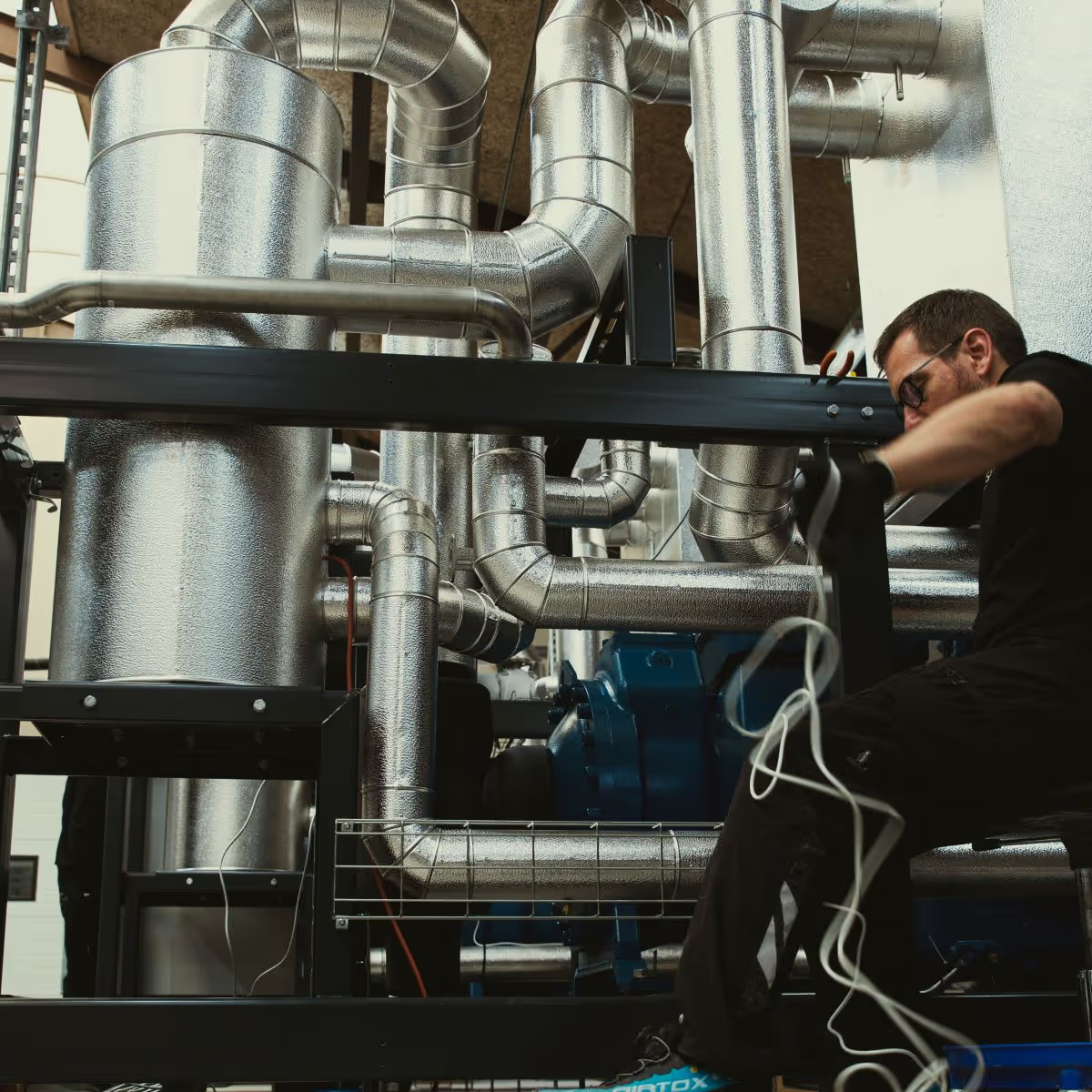
Applications across sectors
The industrial air source heat pump is a flexible solution with applications across many different sectors and industries.
Food production facilities use the systems for space heating and temperature control, where clean, combustion-free operation is particularly important.
Manufacturing companies integrate air source heat pumps with existing heating infrastructure, achieving flexibility without requiring a complete replacement of existing equipment.
District heating operators use them to deliver stable, renewable heat at scale, including in combination with geothermal energy or industrial waste heat.

Sizing and integration
Getting the right system starts with correct sizing. A system that is too small cannot meet demand at peak load, and a system that is too large wastes capital and reduces overall efficiency. A thorough analysis of heat load, operating temperatures and local climate conditions is always the starting point for a well-designed installation.
Integration with the existing heat distribution system is equally important. Air source heat pumps generally perform best at lower flow temperatures, but Solid Energy's high-temperature variants can deliver up to 165°C and are therefore compatible with a wider range of existing installations.

Competitive operating costs
Public subsidies and support schemes can reduce upfront costs considerably, and as CO2 levies increase and requirements on industrial emissions tighten, the investment becomes increasingly attractive.
For organisations that currently rely on gas or oil, the switch also reduces exposure to energy market volatility. A heat pump runs on electricity and therefore provides more stable and predictable operating costs.