Why HydroCarbon wins in industrial applications
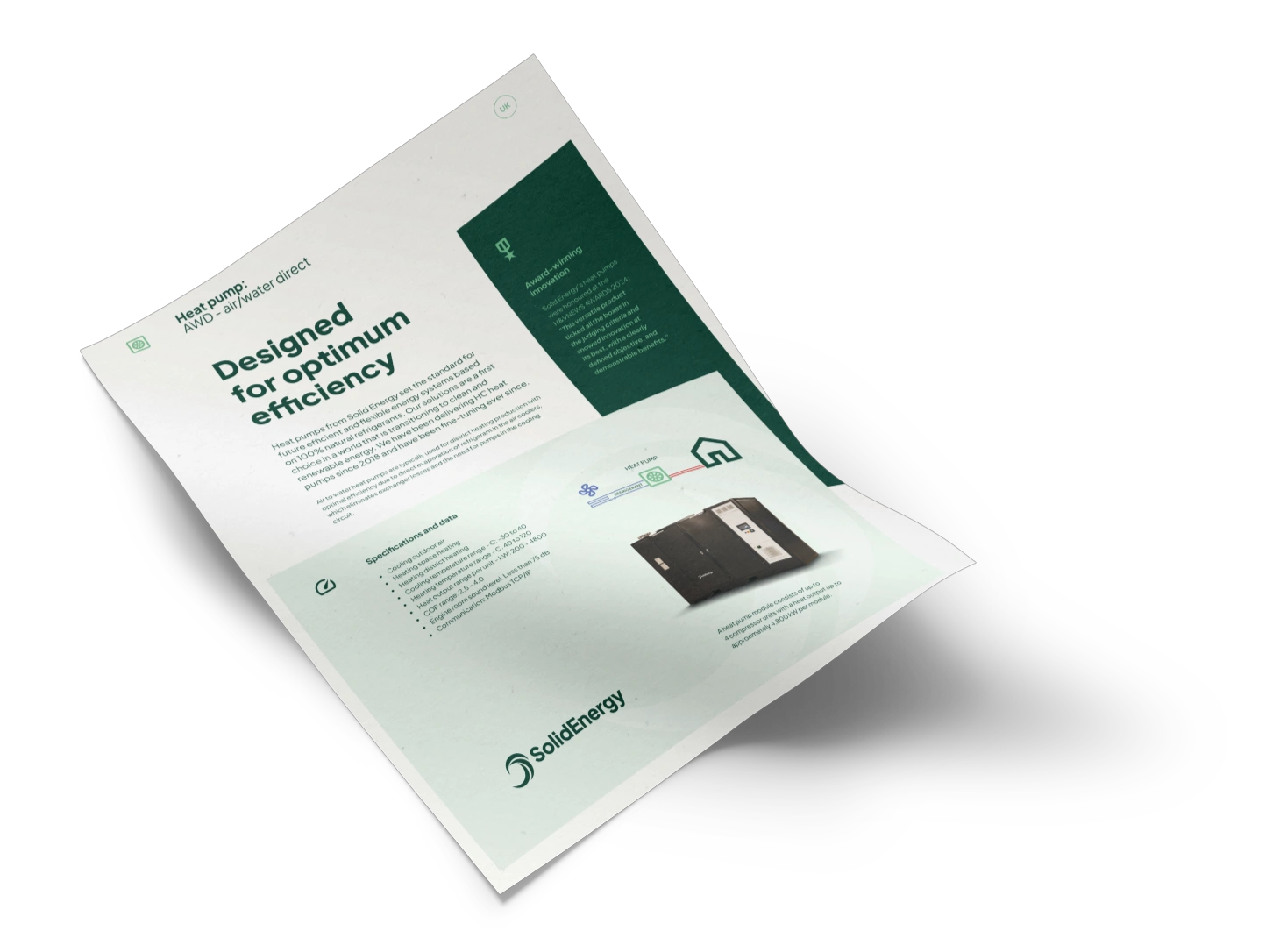
For more than a decade, Solid Energy has specialized in large-scale heat pumps using HydroCarbon as the refrigerant. We have more than 150 large units in operation in the district heating sector, giving us unique insight into the operational, energy and environmental benefits of HydroCarbon as a refrigerant in systems for of critical infrastructure. This experience is the basis for our new heat pumps for industrial applications.
HydroCarbon is ideally suited for industrial production
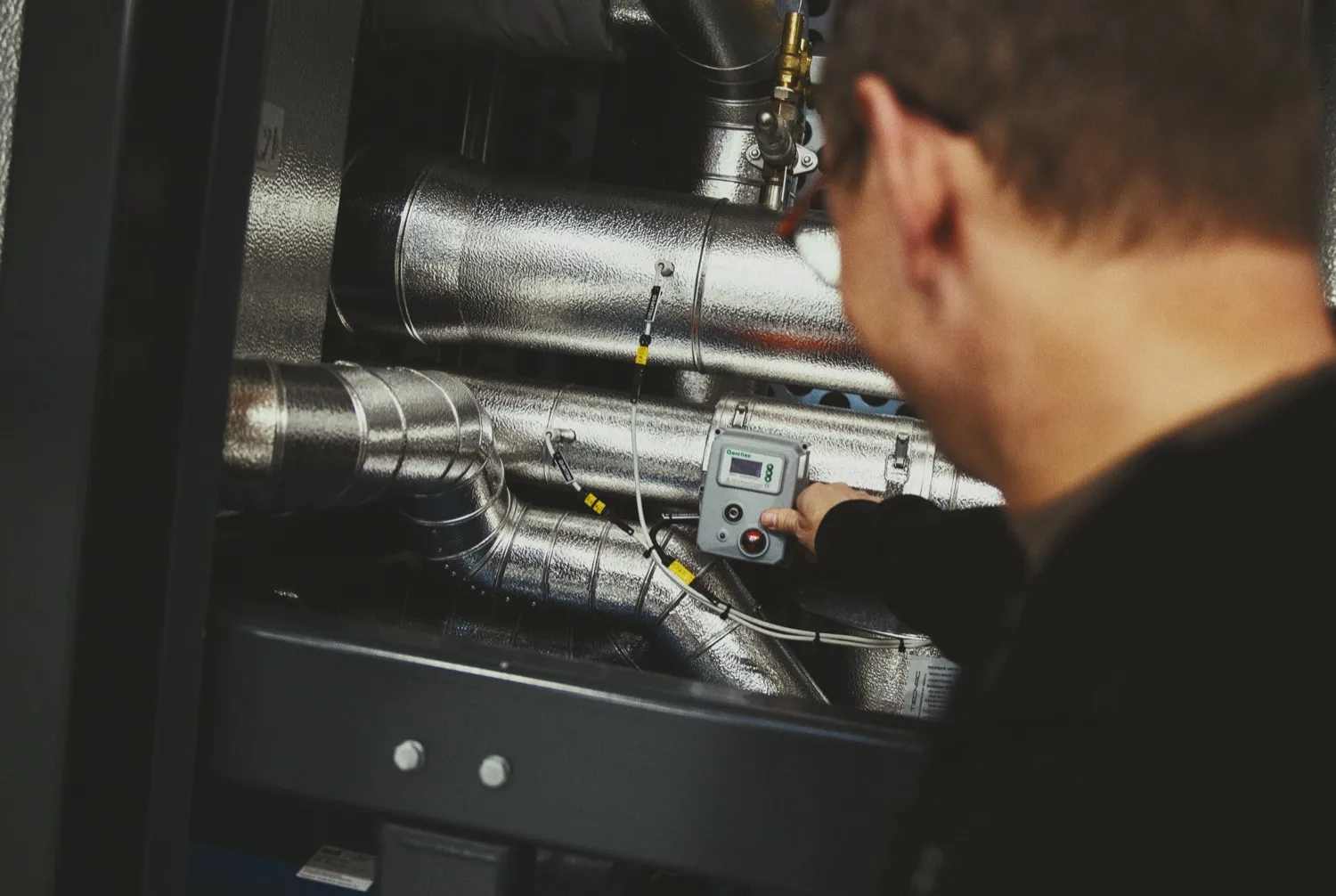
Our new generation of industrial heat pumps is designed to optimise production in, for example, the food, beverage and pharmaceutical industries. They are based on butane and isopentane as refrigerants, which allows them to handle extremely high supply temperatures of up to 115 °C and 165 °C, respectively. This makes the heat pumps ideal for hot-water and low-pressure steam systems in demanding process industries, and they are an excellent replacement for the fossil-fired boilers that unfortunately are still in operation in many places.
What to expect when you switch to HydroCarbon:
- Excellent climate performance and security of supply
Hydrocarbons such as propane, isobutane, butane and isopentane are natural refrigerants that do not deplete the ozone layer and have a global warming potential (GWP ≈ 3) many times lower than synthetic refrigerants. With natural refrigerants you are also unaffected by quota phase-downs and price fluctuations that disrupt security of supply and destabilise operating costs.
- High efficiency – especially at high temperatures
Natural refrigerants have very high COP values, and their efficiency advantage increases at the large temperature lifts that industry needs to handle. This results in lower energy consumption and lower operating costs for the production of hot water or low-pressure steam.
- Lower pressures than CO₂ – simpler and less stressed systems
CO₂ heat pumps operate at very high system pressures, which places stringent requirements on materials, components and inspection routines. Heat pumps with HydroCarbon operate at significantly lower pressures, reducing mechanical stress and enabling robust, modular designs based on standard components. This is one of the reasons why we can offer solutions up to 165 °C.
- Non-toxic alternative to ammonia
Ammonia is efficient and climate-friendly, but it is toxic and mildly corrosive. This leads to requirements for dedicated machine rooms, larger safety distances and specialised handling and maintenance. HydroCarbon, on the other hand, is classified as low toxicity (A3) in international standards. With correct design, leak detection and safety systems, heat pumps based on HydroCarbon can be safely integrated into industrial plants for the production of food and pharmaceutical products.
Ask us about fossil-free solutions for industry
Solid Energy’s HC heat pumps are low-noise, energy-efficient and highly reliable, and come with intelligent control and remote monitoring as standard. For process industries aiming for fossil-free hot-water and low-pressure steam production, they provide a practical and scalable way to reduce CO₂ emissions and energy consumption and to future-proof the heat supply. If you want to know more about the benefits of replacing or supplementing fossil-fired boilers with our heat pumps, we will be happy to review your systems and present a specific business case.
Contact Alex Dahl at ada@solidenergy.dk or +45 44 14 60 97.
More news

Solid Energy and Clayton Announce Strategic Collaboration on Steam Heat Pump
A collaboration that combines very high temperature heat pump technology with established steam expertise to accelerate the decarbonisation of industrial process heat.
Read case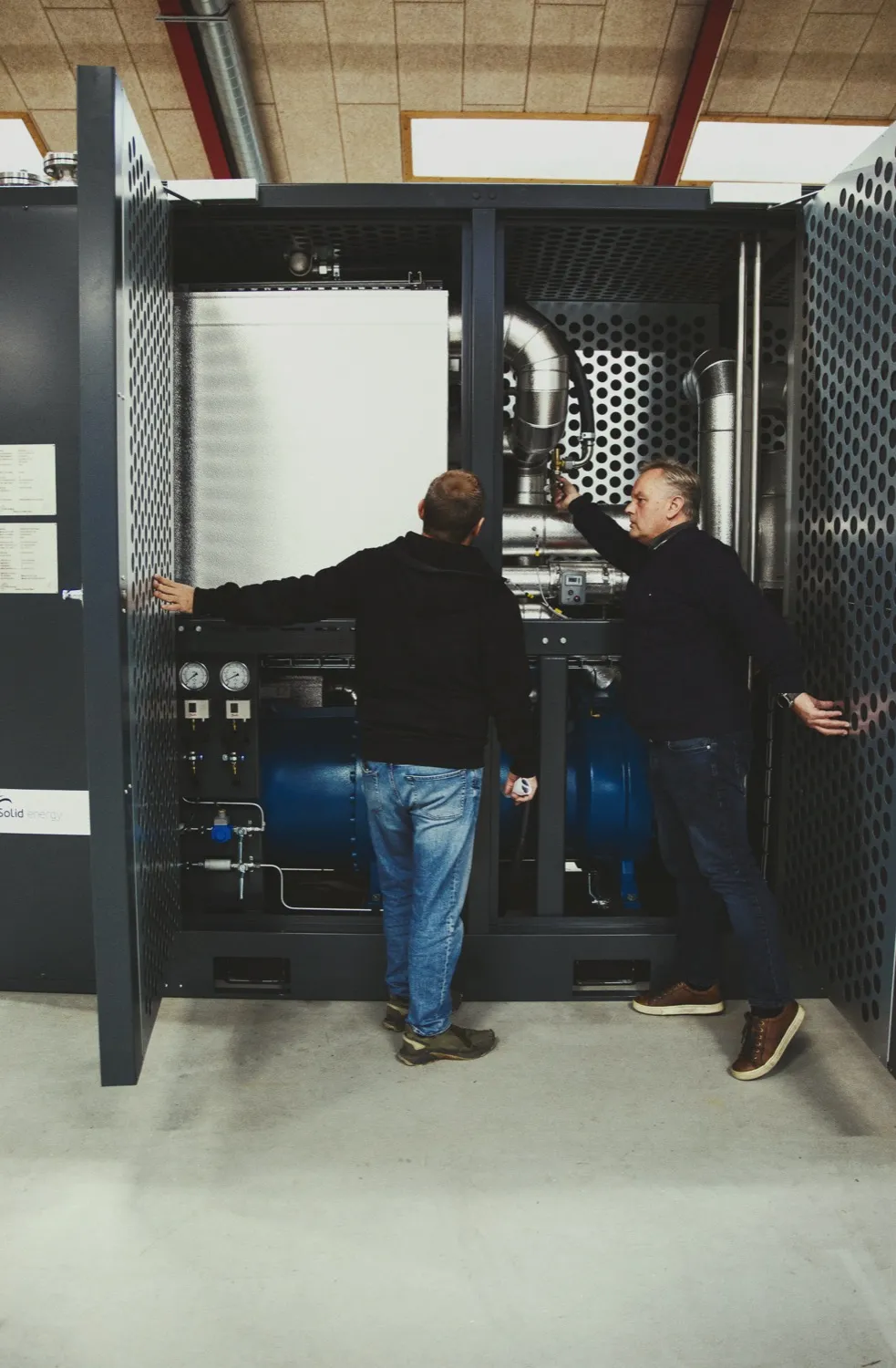
Solid Energy Launches High Temperature Heat Pump at 165°C
Solid Energy is now presenting a new high-temperature heat pump that can deliver flow temperatures up to 165°C. The solution has been developed for large energy projects and builds on our many years of experience with reliable heat pumps for the district heating sector.
Read case.webp)
XLX: When scale is no longer a constraint — but a design principle
How do we build energy solutions that not only match the needs of today — but can grow with it tomorrow?
Read case